The problem
Three related things were tracked in three unrelated places. Incidents in one spreadsheet, compliance obligations in another, training records in a third, each maintained by a different person, each with its own idea of what a site is called.
That made the connections invisible. An incident involving someone whose certification had lapsed is exactly the pattern HSE management exists to catch, and it could not be seen from any single file.
Reporting meant a person reconciling the three by hand, which is slow, and which introduces the errors it is meant to catch.
The solution
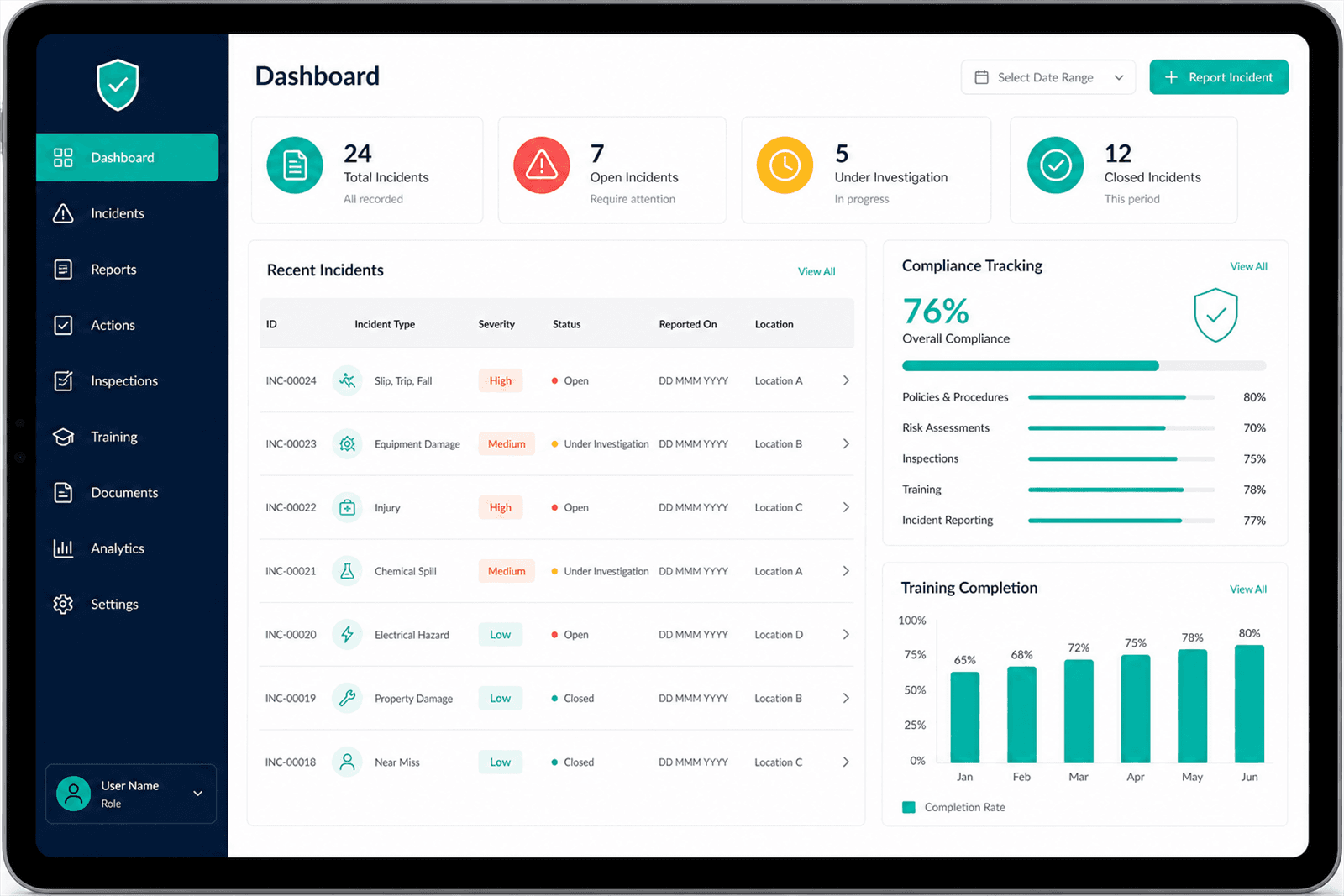
One data model covering all three areas, so the relationships between them exist in the system rather than in somebody’s head. The app is the front end; the model is the actual deliverable.
Incident reporting
Structured capture at the point of report: what happened, where, how severe. That makes incidents comparable to each other instead of free text somebody has to read to understand.
Compliance tracking
Obligations as records with owners and dates, which is what makes them reportable. A compliance item that only exists as a row in a spreadsheet cannot chase itself.
Training records
Who is certified for what, and until when. Held against the same people the incident records reference, which is the connection the separate spreadsheets could not express.
Power Automate for routing
Notification and escalation on report, and reminders ahead of expiry dates. The follow-up happens on schedule rather than when someone remembers to check.
The result
Incidents, compliance, and training became one connected record instead of three disconnected files. Questions that span them can be asked, which previously they could not.
Reminders and escalations run on their own, so an expiry is caught by the system rather than noticed by a person after the fact.
Reporting is produced from the underlying records instead of assembled by reconciling files, which removes the step where the numbers used to diverge.
Outcomes here are described in kind rather than in numbers. I don’t have permission to publish this client’s measurements, and inventing figures to fill the gap would make the rest of this page worth less.
Last updated